02 September 2026

Rick Hopper, 52, a Criminal Justice Recovery Worker for WithYou in North Lincolnshire, tells how he saved a life with the overdose-reversal drug naloxone.
Naloxone is a medicine which can reverse an overdose for 20-40 minutes, giving time to get the person to hospital. It’s administered as either an injection or a nasal spray. It’s easy to administer, affordable, has no potential for misuse, and if it’s given to someone who hasn’t taken an opioid it won’t cause them any harm. It’s carried in a small kit which can be easily stored, carried and given by people with minimal training.
Having worked on the frontline of drug and alcohol treatment for more than 15 years, Rick has had to use naloxone multiple times to save lives. He speaks quietly as he recalls the first time he ever gave someone naloxone in 2015, when he was called to assist the friend of a client, who had overdosed.
“He was totally gone. No response, no breathing. Grey lips, nail beds. No pulse. And it took a total of three injections before he came round,” Rick recalls, shaking his head.
When asked how it felt to intervene in such a critical situation, Rick explains that his naloxone training kept him calm. “Do you know what? I think the old adrenaline was going, and I've been trained, and it just felt natural, you know. I knew what I needed to do. It was only after the fact, going back to the service, when the adrenaline dropped and I started really thinking about what had just happened.” The man was taken to hospital by ambulance, and Rick's swift action saved his life.
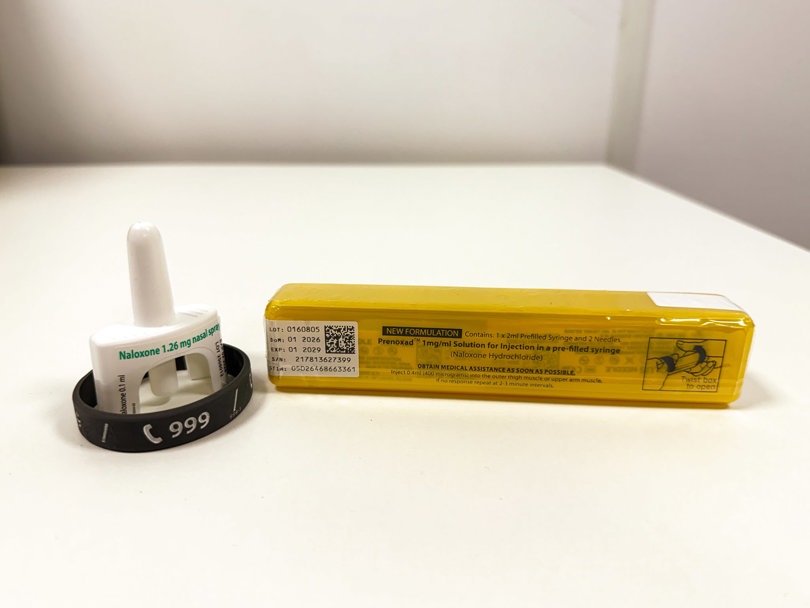
It has been more than 10 years since the law changed in 2015, allowing drug treatment services to give out naloxone without a prescription. But Rick emphasises there is still a significant barrier to overcome: the stigma associated with drugs, and with overdoses. He wants people to know that overdose can affect anyone, from any walk of life.
“There’s a stigma when it comes to overdoses. It could be grandma who's got dementia, she’s on opiate medication and she’s forgotten that she’s already taken it. Or it’s someone who has cancer and has opiate pain medication. If you take too much, there’s a potential of overdose.”
In response to those who suggest overdose is merely the consequence of bad choices, Rick says quietly and firmly:
“They’re a human being. They’re somebody's son, somebody's daughter, somebody's father, somebody's mother, somebody's grandchild. They deserve to live as much as the next person.
“I think you need to step back and think actually, what's going on with that person? You don't know what's going on in that person's life to lead them to that point. Nobody wakes up and thinks ‘That's it. I'm going to be a drug user and I'm going to overdose.’ They're hurting in some way. The majority of people struggling with drugs and alcohol have got mental health issues. They've got some form of trauma. They use substances to manage their mental health - to numb what’s going on with them.”
Rick and his colleagues have spent significant time training local partners, including officers from Humberside Police, community pharmacies, local housing, probation services, and every member of staff at a local GP, on how to use naloxone. He believes this knowledge should be universal.
“It should be a lot more accessible. It's a life saved, isn't it? It’s important to be able to stick it in your handbag, stick it in your pocket, just take it everywhere.”
WithYou services provide naloxone and naloxone training to people using drugs, as well as friends and family members.