02 September 2026

Carl has lived through challenges with drugs and alcohol, homelessness, and the hidden challenge of undiagnosed autism - and come out the other side determined to create the support he wishes he’d had. After 11 years in recovery, he is now a recovery worker at WithYou in Wigan and Leigh and runs his own peer support group in the community, using his journey to help others overcome their own challenges with neurodivergence, drugs and alcohol.
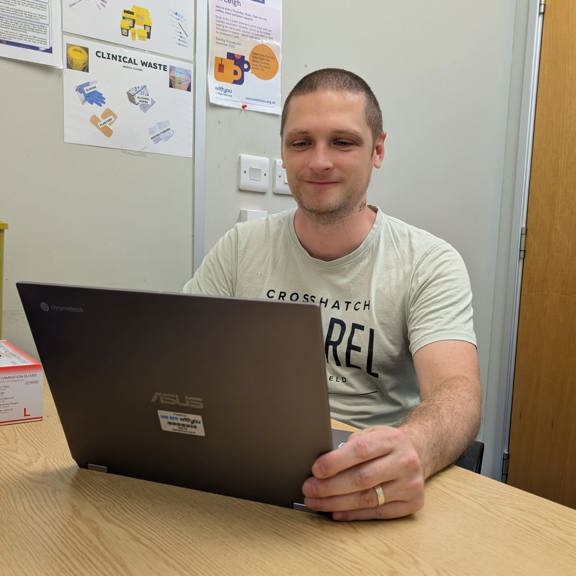
From a chaotic upbringing and years spent in and out of homeless hostels, his life was very different over a decade ago. Today, he’s settled, focused on his family, and bringing his own hard-won understanding of neurodivergence directly into the service, launching a new peer support group modelled on the success of his community work.
Here, Carl shares his story - from the struggle of undiagnosed neurodivergency to building a support network for others in his community, and now his clients.
Finding the missing piece
Carl’s early years were marked by instability. In and out of homeless hostels from the age of 16, he struggled with alcohol and substance use for years. It wasn’t until three years ago - nearly a decade into his own recovery - that he received a diagnosis of autism.
It wasn’t a shock, but it provided a missing piece to a puzzle he’d been trying to solve for his entire life. Looking back, he sees how his substance use was often a coping strategy to manage anxiety and overwhelm.
One of the big things for me was a question I had to answer for myself: if I’d known when I was growing up, and got the support I needed, would I have gone through addiction the way I did with substances and alcohol?” he asks.
Turning lived experience into passion
Carl’s recovery has been a process of self-discovery, eventually leading him into a career where he can support others. Having worked in homeless hostels and with people with learning disabilities, he began to notice a pattern in the clients walking through the doors at WithYou.
He saw people who, like him, were likely neurodivergent and using drugs or alcohol as a coping strategy. “I see a lot of people who possibly have neurodiversity, are unaware of it, and are masking through alcohol or drugs,” he says.
Based on his own lived experience, he started a peer support group in his community for neurodivergent adults. What began with just three people has grown into two weekly sessions, with eight to fifteen people attending. The group focuses on sharing coping strategies for daily life - from managing public transport to navigating new environments. But crucially, it doesn’t just treat neurodivergence as a condition to be managed.
“We don’t just look at the negatives, either—it’s looking at the positives too, because there are a lot of positives, you know,” Carl says. “Some of my best qualities are because of how I am, and I’m aware of that.”
Recognising the success of this model, Carl spent months working with his team leader to bring the group into the WithYou service in Leigh. The new group, which launched in August this year, is built on the same philosophy that has already proven so effective in the community: shared lived experience and practical coping strategies.
“We might have unorthodox ways of coping with things that other people might not understand, but you’re never judged in my groups. I think showing that I’m a person first, before anything else, helps too,” he says.
Seeing the whole person
Carl emphasises that you can’t look at substance use in isolation - you have to look at a person’s whole life.
“Nobody sets out to have a drug or alcohol issue; it’s about who they’ve got around them, what support they’ve got, whether they’ve got the key things in place,” Carl reflects. “If they’ve got nowhere to live and nobody to talk to, no support at all, it’s very difficult. It’s about pointing them to the right places where they can get extra support.”
For him, recovery is about goal-setting, community, and the simple, but profound, realisation that change is possible.
“If I can do it, then goodness me. It’s doable,” Carl says.
I’ve got four kids and a wife now - my life goals used to be just having somewhere to live, maybe having a girlfriend, and that felt completely out of reach at one point. So yeah - make goals, and fight towards them.
Want to learn more about our support in Wigan and Leigh? Visit wearewithyou.org.uk/local-hubs/wigan-and-leigh


