Ketamine advice and support in BCP

What ketamine does to your body, and how to get free, confidential support in Bournemouth, Christchurch and Poole.

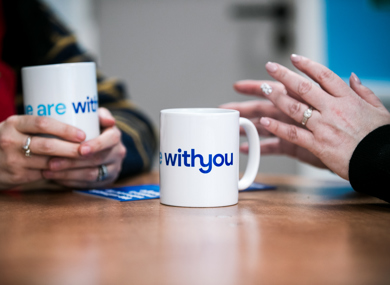
Two people sitting at a table, holding mugs with the text "WithYou" visible on one of them.

This page is for young people in Bournemouth, Christchurch and Poole.

It gives you honest information about ketamine, whether you're using it yourself or you're worried about a friend. 

We'll explain what ketamine does and how to stay safer if you use it. If you want to talk to someone, we'll show you how.

We're WithYou, and we're here when you need us.

Risks of using Ketamine

Ketamine is a dissociative drug, which means it can make you feel detached from your body and your surroundings. It usually comes as a grainy white or light brown powder. How it affects you depends on your age, weight, what else you've taken, how strong it is, and how much you use it. The effects usually start around 15 minutes in and last from 30 minutes to an hour, though they can go on for longer.

Using ketamine regularly can do serious damage to your body, and some of that harm doesn't go away. Frequent use can cause:

  • Bladder damage, including needing to wee urgently and often, and losing control of your bladder. This can become permanent.

  • Mental health problems, like feeling very anxious or low, panic attacks, or hallucinations

  • Damage to the inside of your nose from snorting

  • Memory loss, short-term and long-term

  • Liver and kidney damage

Taking a lot in one go can lead to a "k-hole", where your mind and body feel completely separated. Some people chase that feeling, but it can be frightening and hard to come back from.

Injecting ketamine carries the highest risk. It raises the chance of catching a blood-borne virus like Hepatitis C or HIV.

How to reduce harm while using ketamine

We recognise that some ways of using drugs carry less risk than others, and by providing information which supports people to make informed decisions, we can help people to minimise harm.

Before you start, check:

  • Is now the right time? How you’re feeling when you use ketamine can impact the effects you may experience, so consider checking in with yourself and thinking about whether now is a good time for you.

  • Do I know what I’m taking? Researching what you’re planning to take, what the effects can be and how to reduce harm can help to keep you safe. 

  • Have I contacted a friend or family member? In case you need help while you’re taking ketamine, consider telling someone your plans.

While you're using:

Start low, go slow

Strength can vary between batches, even if you take the drug regularly, starting with a small amount and waiting at least two hours before your next dose can help to reduce the risk of overdose.

Go at your own pace

Everyone responds differently to drugs - trying to keep up with others puts you at greater risk of overdosing. 

Plan and measure doses

If you’re going out, only take what you plan to use with you as this makes it easier to set boundaries and stay in control. It’s easier to lose track of time when using drugs, so taking a screenshot of the time or setting a timer each time you have a dose can help you space out your doses.

Try not to use on your own

It's best not to use ketamine if you’re on your own or if you’re in a position where there is nobody you could call for help. A buddy system - where one person takes their hit first and waits until the peak effects have worn off before the other person uses - makes it more likely that someone can help if anyone overdoses.

Find a safe space

Where you are when you take ketamine can impact the effects you may experience, so try and find a space where you feel safe, comfortable, with people you trust.

Try not to mix

Try to take ketamine on its own, as mixing with other drugs or alcohol can increase your risk of overdose.

Opt for methods that carry less risk

Snorting or swallowing ketamine is less risky than injecting. If you’re snorting ketamine, taking a small amount (bump), finely crushing the powder first, alternating nostrils, and rinsing the nose with clean water after use will help to reduce damage to your nose. 

Use your own equipment

Using your own equipment, including straws and measures, can help to prevent the spread of blood-borne viruses (BBVS) like hep B, hep C and HIV. You can get clean equipment from any drug service and many pharmacies. 

The recovery position

The recovery position helps to prevent someone unconscious from choking on vomit. If someone is unconscious, putting them in the recovery position, getting help if needed, and staying with them will help to reduce the risk of harm.
After using ketamine:

  • Looking after and being kind to yourself is important - get plenty of sleep and rest, and try to avoid taking any other drugs to give your body time to recover

  • Refuelling will help your recovery - this includes drinking plenty of water and eating something nutritious which is soft on your stomach and not too rich

  • If you think you may be at risk of blood-borne viruses (BBVs) like Hep B, Hep C and HIV, you can access free testing from any drug and alcohol service, your GP, or a sexual health centre. You can catch a BBV even if you don’t inject a drug - through unprotected sex or sharing equipment

And always remember - if you’re feeling low and feel you can’t talk to a friend or family member, contact us for help through our webchat or find your local service.

The law around ketamine

Ketamine is a Class B drug, which means it's illegal to be found carrying or using it. The legal term for this is possession. The maximum sentence for possession of a Class B drug is up to five years in prison, a fine or both. 

It’s also illegal to give away or sell ketamine. This is known as supply, and is a more serious offence than possession.  It can be considered supply if you give your friend some or share some with them, and this could get you time in prison, an unlimited fine or both.

How to get support

If you're worried about your ketamine use, or about someone else, we're here. Our support is free, confidential and non-judgemental, and you don't have to pay for any of it.

WithYou in Bournemouth, Christchurch and Poole offers support, treatment and advice for young people and their families. Our young people's services are mainly for ages 11 to 18, and sometimes up to 24.

We're here to listen, and we won't tell anyone what you share with us without your permission.

We can meet you wherever you feel most comfortable, whether that's at home, school, college or a youth club. In BCP we also offer Cognitive Behavioural Therapy (CBT) as part of our young people's support, which can help you work through the reasons behind the drug use.

You can:

  • Find your local service and see what's on offer near you.

  • Talk to us online through our webchat if you're not ready for an in-person service.

  • Ask a parent, carer or worker to refer you, or get in touch yourself.

If there's an immediate risk to life, such as a suspected overdose, call 999.

Person in gray sweater holding a phone displaying the WithYou support website, sitting on a zebra-patterned blanket.

Not ready to speak to someone face to face?

You can chat to one of our trained recovery workers online instead. It's free and confidential, and you can do it from wherever you are, as long as you've got a device and an internet connection.

Talk to us about your own drug or alcohol use, or about someone you're worried about. If you'd rather, you can stay anonymous and don't even need to give us your name.

We're open Monday to Friday, 9am to 9pm, Saturday and Sunday, 10am to 4pm.

You can still message us outside these hours, and we'll get back to you once we're open again. Our webchat is for anyone over 13. If you're 13 or under, Childline can help instead.

To start a chat, click the blue "Chat Live" box on the screen. If we're busy, you can join a queue and we'll be with you as soon as we can.

Everything you tell us stays private. The only time that changes is if we're seriously worried about your safety or someone else's.