26 June 2026

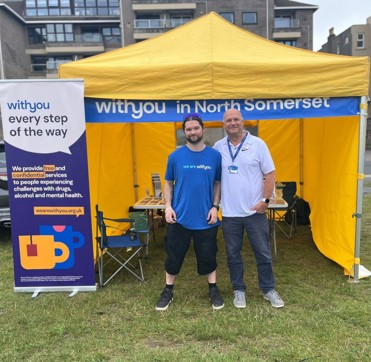
Ahead of Armed Forces Day this Saturday, Barry Pratt, armed forces lead and recovery worker for WithYou in North Somerset is reaching out to the armed forces community to say help is available and they do not need to struggle in silence. We sat down with Barry to hear more about his role and the support available.
Can you describe your role as the Armed Forces Lead at WithYou?
I oversee the support for veterans, their families, and serving members who enter our service. Under the Armed Forces Covenant, we offer exactly the same level of comprehensive support to families as we do to veterans and serving members.
My role involves offering guidance to their designated recovery workers as well as providing direct support to the clients themselves. In North Somerset, we have developed a vast network within the Armed Forces Covenant.
Through extensive networking, I have brought together various forces’ charities and government agencies, enabling direct referrals to WithYou.
This allows our recovery workers to have established links with essential services such as NHS Health Authorities, the DWP, local councils, social housing providers, and organisations like the Citizens Advice Bureau – all of which now have veterans’ champions or leads.
I am proud of the resource I have built; most organisations in North Somerset already know they can support veterans by referring them to WithYou. However, I am always looking to expand our commitment. For example, we are currently in the process of training a local fire officer to become a Veteran Champion, as they frequently encounter veterans and families in need during their work.
We utilise Op COURAGE and various Valour Hubs for veterans struggling with their mental health, but the core of our support lies in our excellent in-house counselling, which is specifically adapted for veterans and their families. Veterans and serving members live by structure, and we ensure our support provides that same sense of reliability and order.
Additionally, I run veterans' groups at the Royal British Legion (RBL) and manage a veteran-aware rehabilitation home in Weston-super-Mare. This facility is staffed by veterans’ family members, providing a specialised environment where veterans can truly excel. I also provide support to serving members navigating the court system through our Criminal Justice Intervention Team (CJIT).
What motivates you?
As a veteran myself, I have a deep personal passion for the Armed Forces.
My motivation is to leave behind a streamlined, structured referral and treatment plan when I eventually retire. WithYou is so far ahead of other providers in this space, and that gives me the enthusiasm to know that this goal is truly achievable.
What are the main challenges you see veterans and the wider armed forces community facing around drugs and alcohol?
The primary challenge is often the stigma associated with seeking help. After being trained to adapt and overcome any obstacle, admitting to a personal struggle can be incredibly difficult.
Alcohol, in particular, is deeply embedded in the social fabric of the armed forces - you celebrate, commiserate, and "play hard" together. - making it harder to recognise when use has become problematic. Sadly, it is also frequently used to mask trauma.
We also see the profound shock that leaving the service brings. Transitioning is difficult if you are unprepared for civilian life, which lacks the inherent discipline and comradeship of the military. Having to learn how to manage bills, find employment, and navigate changing family circumstances all add immense pressure. Many deal with hypervigilance and the complex effects of PTSD, which can lead to broken relationships following discharge.
In North Somerset, housing is currently the biggest challenge veterans face. It is also the most significant threat to recovery, as housing instability often exacerbates issues for our veterans and their families.
How do you engage the armed forces community who may be reluctant to seek help?
We engage them with openness and honesty, and by using our lived experience as veterans, and experience as leads in the service. By speaking freely at meetings and events, and working closely with stakeholders to facilitate direct referrals, we reach those who might otherwise stay silent. Ultimately, we want them to know they are not alone and they have not been forgotten.
What do you think the public often misunderstands about veterans’ needs?
People often view veterans solely as "fighting machines" who can handle anything. They sometimes lose sight of the fact that veterans are human beings who may have been asked to perform tasks most civilians could never imagine. Furthermore, some veterans feel a lack of respect due to the nature of recent wars and conflicts, which only adds to their isolation.
Can you share a moment from your work which has made a life-changing difference for someone?
We recently supported a veteran who was alcohol dependent. Through our veterans' group and the support of a veteran lead who served as his recovery worker, he achieved sobriety. He has since been accepted into the Royal Navy, possibly as a submariner. It's incredible to see him return to service after turning his treatment into a positive life change. I've also worked with a Royal Marine who was able to maintain his career by becoming abstinent. As an ex-RAF man, it's hard to admit, but the Royal Navy really seems to be leading the way here!
If you could send one message to veterans who may be struggling silently, what would you want them to hear?
To my brothers and sisters: Come and stand beside us. We’ve got your back.
To learn more about our Armed Forces Community programme visit wearewithyou.org.uk/what-we-do/drug-and-alcohol-services-for-adults/support-for-the-armed-forces-community
Related articles

22 June 2026
Meeting the needs of the Armed Forces Community: Inside WithYou's Armed Forces Programme

17 June 2026
From the Royal Navy to self-discovery: how Arron found recovery and a new sense of purpose

24 June 2026